
How We Celebrate Juneteenth — A Reflection
By Dr. Brenna Nance, MD — Managing Partner, CityDoc Urgent Care
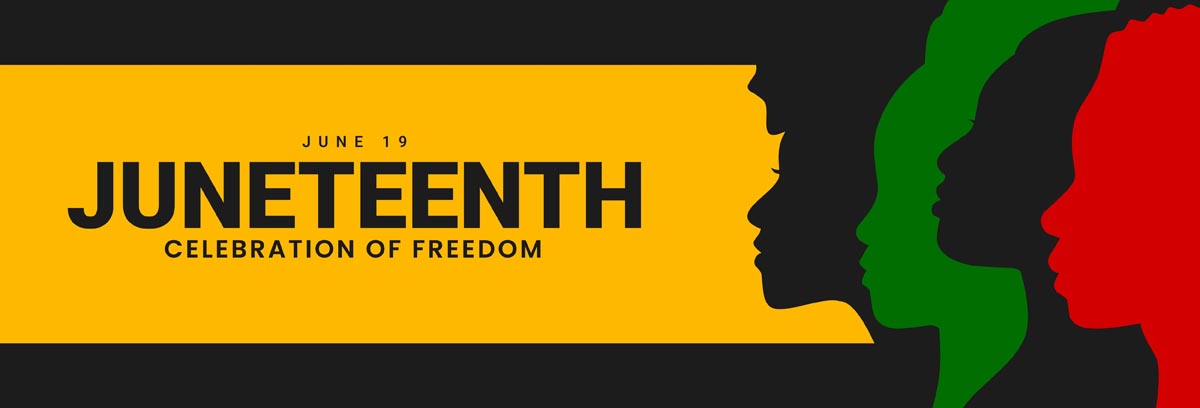
On July 4, 2026, the United States will celebrate the 250th anniversary of the adoption of the Declaration of Independence.
It declares, in words that have been memorized and recited and carved into stone ever since:
“We hold these truths to be self-evident, that all men are created equal, that they are endowed by their Creator with certain unalienable Rights, that among these are Life, Liberty and the pursuit of Happiness.”
— Declaration of Independence, 1776
But African Americans in Texas can only claim 166 years of freedom in this country.
The gap between those two numbers is what Juneteenth asks us to sit with. It is not a gap that should embarrass us into looking away. It is a gap that should call us forward — into both remembrance and action.
What Juneteenth Marks
Picture Galveston in June of 1865. The Civil War has technically ended. Union troops have arrived. And on June 19th, they deliver news that is not new: that the enslaved people of Texas are free. They had been free — on paper, by presidential proclamation — for two and a half years already. The news had simply never been enforced.
That delay was not an accident of geography. It was a choice.
To understand the full weight of that choice, you have to go back further and read the laws that made it possible.
In 1662, Virginia’s colonial legislature took up a troubling question that had arisen among its planters: what is the legal status of a child born to an enslaved woman and a free man? Their answer, the status of the child follows the status of the mother. Bondage would be hereditary — passed through birth, permanent by law.
Five years later, in 1667, Virginia closed another door. Some enslaved people had hoped that Christian baptism might carry legal standing — that conversion might, in some way, bridge them to the rights afforded other Christians. The legislature ruled otherwise. God, apparently, was not a factor in the ledger.
By 1705, the architecture was complete. Through a series of statutes known collectively as the slave codes, Virginia formally categorized enslaved people as real estate. Not persons. Property.
Treating a human being as real estate commodifies them as valuable only in terms of their productivity, utility, or economic output — rather than respecting their inherent dignity as a human being. That is the moral weight Juneteenth lifts off. It is why this day matters.
Ms. Opal Lee: The Grandmother of Juneteenth
It would be 156 years between that day in Galveston, and the day Juneteenth was finally recognized as a federal holiday. On June 17, 2021, President Biden signed it into law. Ms. Opal Lee stood beside him as he signed.
The reason that signature happened — the reason most Americans now know the word Juneteenth at all — has a name. And she lives in Fort Worth.
Ms. Lee has lived most of her 98 years in our city. She taught in Fort Worth schools for decades, including fifteen years at Amanda McCoy Elementary, back when teaching paid $2,000 a year. Upon retirement from the Fort Worth Independent School District in 1977, she didn’t step back from her community — she leaned further in. She organized. She wrote a children’s book about Juneteenth. She ran a food bank and community garden through her neighborhood. And as she crossed into her 80s, she fixed her attention on something she felt American history classrooms had been quietly skipping: the meaning of June 19, 1865.
In 2016, at 89 years old, she set out from Fort Worth on foot. The destination on paper was Washington, D.C. — some 1,400 miles away — but the symbolism wasn’t in the distance. It was in the daily walk: 2.5 miles, every day. The number was chosen with intention. Two and a half miles for the two and a half years enslaved people in Texas waited to learn they had been freed after the Emancipation Proclamation. She walked stretches of those miles to call attention to a date that the country had been allowed to forget.
Along the way, she gathered a petition. By the time it reached Congress, it carried 1.5 million signatures.
Five years later, she was in the White House watching the holiday she’d walked for become federal law.
“As a lifelong educator, I know that what we teach today shapes tomorrow. So, if people can be taught to hate, they can be taught to love.”
— Ms. Opal Lee
That is the legacy Fort Worth carries. This is not national history that happened to land in our city. This is Fort Worth history that finally reached the nation.
How to Celebrate Juneteenth: Remembrance and Action
Juneteenth deserves celebration. It is, fundamentally, a celebration — of freedom, of perseverance, of the people who refused to forget. But Ms. Lee’s life teaches us something the celebration alone cannot: that celebration without action is incomplete.
Scripture tells us in James 2:17 that faith by itself, if it is not accompanied by action, is dead. The same can be said of remembrance. If we mark this day without letting it move us toward anything, we have not really marked it at all.
Here is what celebrating Juneteenth can look like, especially here in Fort Worth and across the broader DFW community:
- Walk with Opal’s Walk for Freedom. Lee’s annual 2.5-mile walk is held in Fort Worth each June. Information is shared through her nonprofit, Unity Unlimited Inc. Walking those 2.5 miles is one of the most direct ways to step into the meaning of this day.
- Visit the Tarrant County Black Historical and Genealogical Society. A Fort Worth institution preserving the local history that national curricula often skip.
- James Baldwin. Toni Morrison. Annette Gordon-Reed’s On Juneteenth. Clint Smith’s How the Word Is Passed. Ms. Lee’s own children’s book on Juneteenth is a beautiful place to begin with younger readers. The teaching she spoke of begins with the reading we do ourselves.
- Support Black-owned businesses across Dallas and Fort Worth. Spend intentionally. It matters.
- Have the conversation with the children in your life. Especially if they are young. Especially if it feels uncomfortable. Ms. Lee was an educator first — she would tell you the conversation is exactly the point.
- Quietly. Honestly. Reflection, too, is action.
There is an old line from the philosopher George Santayana, written in 1905: Those who do not know history are condemned to repeat it. It is as true now as it was when he wrote it — perhaps more so. The power of Juneteenth is in remembrance and action. Knowing what happened and refusing to let it happen again.

A Note from Dr. Nance
I get to practice medicine in a city that produced Ms. Opal Lee. That is not a small thing.
At CityDoc Urgent Care, we serve communities across Dallas and Fort Worth, including our location on West 7th — the same city Ms. Lee walked from, the same city she shaped by refusing to be quiet about a date the rest of the country had decided to forget.
Juneteenth is, ultimately, a story about people who taught. People who refused to let the next generation grow up without knowing. As a physician and as a Fort Worth neighbor, I am grateful — for Ms. Lee, for the educators and organizers who came before her, and for the chance to write this and offer it to our community.
If you take one thing from this reflection, I hope it is hers: if people can be taught to hate, they can be taught to love.
That is the work. That is the celebration.
Dr. Brenna Nance, MD — Managing Partner, CityDoc Urgent Care
Sources & Acknowledgments
Biographical details about Ms. Opal Lee in this reflection draw on publicly available material from the National Museum of African American History and Culture (NMAAHC) and from Ms. Lee’s nonprofit organization, Unity Unlimited Inc. Historical context regarding the Virginia slave codes draws on primary source records as cataloged by the Encyclopedia Virginia and the Gilder Lehrman Institute of American History.
To learn more about Ms. Lee’s work and Opal’s Walk for Freedom, visit unityunlimitedinc.org.