
Swimmer's Ear: Treatment Options and When to Come In
You got home from a day at the pool, the lake, or the water park, and now your ear is itching, throbbing, or starting to ache when you tug on the lobe. That’s the early signature of swimmer’s ear — and in DFW summers, it’s one of the most common reasons people walk into CityDoc.
Here’s what swimmer’s ear actually is, what swimmer’s ear treatment looks like (home care, when prescription drops are needed, and how long it takes to clear), and when it’s time to skip the home remedies and get evaluated.

What Is Swimmer’s Ear? (And Why It’s So Common in DFW Summers)
Swimmer’s ear — medically known as otitis externa — is a bacterial infection of the outer ear canal, the tube that runs from the opening of your ear to your eardrum. It’s different from a middle ear infection (which sits behind the eardrum and is common in young kids), and it’s treated differently.
Here’s how it happens: water gets trapped in the ear canal. The trapped moisture breaks down the canal’s protective waxy lining, creating a warm, damp environment that bacteria love. The bacteria multiply, the canal becomes inflamed, and within a day or two you’ve got an active infection.
In DFW, summer is peak swimmer’s ear season for an obvious reason: nearly everyone is in the water. Backyard pools across Dallas and Fort Worth. Community pools and apartment complex pools. Lake Grapevine, Lake Ray Hubbard, White Rock Lake. NRH₂O, Hawaiian Falls, and Six Flags Hurricane Harbor. The more time you or your kids spend submerged — especially in lake water or heavily used pools — the higher the risk. The CDC reports approximately 2.4 million healthcare visits a year for swimmer’s ear in the U.S., and the overwhelming majority happen between June and August.
Swimmer’s Ear Symptoms: How to Know What You’re Dealing With
Symptoms typically progress in stages. Catching it early matters — mild cases are easier and faster to treat than advanced ones.
Early Signs (Act Now Before It Gets Worse)
- Itching inside the ear canal — almost always the first symptom, and the one most people ignore
- Mild discomfort when you touch or tug on the ear
- A subtle feeling that something’s “off” in one ear
As It Progresses
- The tug test: pain that gets noticeably worse when you tug on the earlobe or push on the tragus — the small bump of cartilage at the front of your ear opening. This is the diagnostic indicator that separates swimmer’s ear from a middle ear infection (where touching the outside doesn’t change the pain). If pressing or pulling makes it worse, that’s swimmer’s ear.
- Feeling of fullness in the ear or muffled hearing
- Clear or slightly cloudy drainage from the ear canal
- Visible redness around the canal opening
Severe Signs That Need Prompt Care
- Intense pain even without touching the ear
- Significant swelling that’s visibly narrowing or closing the ear canal
- Fever — indicates the infection may be spreading beyond the ear canal
- Facial swelling or pain radiating into the jaw, neck, or side of the face
The tug test:
If pulling on your earlobe or pressing the small bump at the front of your ear opening makes the pain noticeably worse, you’re almost certainly dealing with swimmer’s ear and not a middle ear infection.
Swimmer’s Ear Treatments: What Works (And What Doesn’t)
Here’s where a lot of people lose time: home remedies can help with very early symptoms or prevention, but they don’t treat an active bacterial infection. Most established cases need prescription ear drops to fully clear.
At-Home Treatment (For Mild, Very Early-Stage Cases Only)
- Dry the ear gently. Tilt your head to each side and gently tug the lobe to help trapped water drain. A hair dryer on the lowest setting, held 12–14 inches from the ear, can also help — do not press it against the ear.
- OTC drying drops containing acetic acid and isopropyl alcohol (Swim-EAR, Auro-Dri) can help with very mild early symptoms and are useful as a preventive measure. They will not treat an established infection.
- OTC pain relief. Ibuprofen or acetaminophen helps with the discomfort while symptoms resolve.
- Keep the ear dry. No swimming, no submerging the ear in the bath, no earbuds or hearing aids until symptoms fully resolve.
What NOT to do:
Cotton swabs push debris deeper into the canal and damage the protective lining — they make swimmer’s ear worse, not better. Ear candles are ineffective and can cause burns or punctured eardrums. Do not attempt to flush the canal at home.
Prescription Treatment (What Actually Clears the Infection)
The standard treatment for swimmer’s ear is a course of prescription antibiotic ear drops, often combined with a corticosteroid to reduce inflammation. These prescription drops are formulated specifically to penetrate the ear canal and kill the bacteria causing the infection — something OTC drying drops cannot do.
- Typical course: twice-daily drops for 7–10 days. Symptoms usually start improving within 24–48 hours of starting treatment.
- Ear wick: if the canal is significantly swollen, the provider may place a small sponge wick to help the drops reach the infected area. It sounds worse than it is — it actually relieves pressure and gets the medicine where it needs to go.
- Oral antibiotics are sometimes prescribed if the infection has spread beyond the canal, if there’s significant swelling, or for high-risk patients (diabetics, immunocompromised).
How Long Does Swimmer’s Ear Last?
Timeline depends entirely on whether you treat it properly.
- With prescription ear drops: symptoms typically start improving within 1–3 days. Full resolution usually takes 7–10 days with the complete course of treatment. Even when you feel better at day 3, finishing the full course matters — stopping early can cause the infection to come back.
- Without treatment: swimmer’s ear typically gets progressively worse, not better. Untreated cases can develop into chronic otitis externa (symptoms lasting more than three months) or, rarely, malignant otitis externa — a serious infection that spreads to surrounding tissue and bone. This complication is more common in people with diabetes or weakened immune systems and requires hospital-level care.
- Return to swimming: wait at least 7–10 days after starting treatment, or until you’re completely pain-free and your provider clears you. Going back in the water before the canal has fully healed is the fastest route to a repeat infection.
When Should You Come In?
Don’t wait through misery hoping it clears on its own. Here’s when to walk in and get evaluated:
- Pain that hasn’t improved after 24–48 hours of home care, or pain that’s significant from the start
- Fever — a clear sign the infection may be spreading
- Thick, yellow, or bloody discharge from the ear
- Visible swelling that’s narrowing the ear canal
- A child under 2 years old with ear pain after swimming
- You have diabetes, are immunocompromised, or are on chemotherapy — these patients are at much higher risk for serious complications and should not try home treatment
- Recurring swimmer’s ear — if this happens often, a provider can prescribe a longer treatment course and a preventive drops regimen

How CityDoc Treats Swimmer’s Ear
Same-day swimmer’s ear treatment at any of our four DFW locations. Walk in, no appointment needed, no waiting days for a primary care opening.
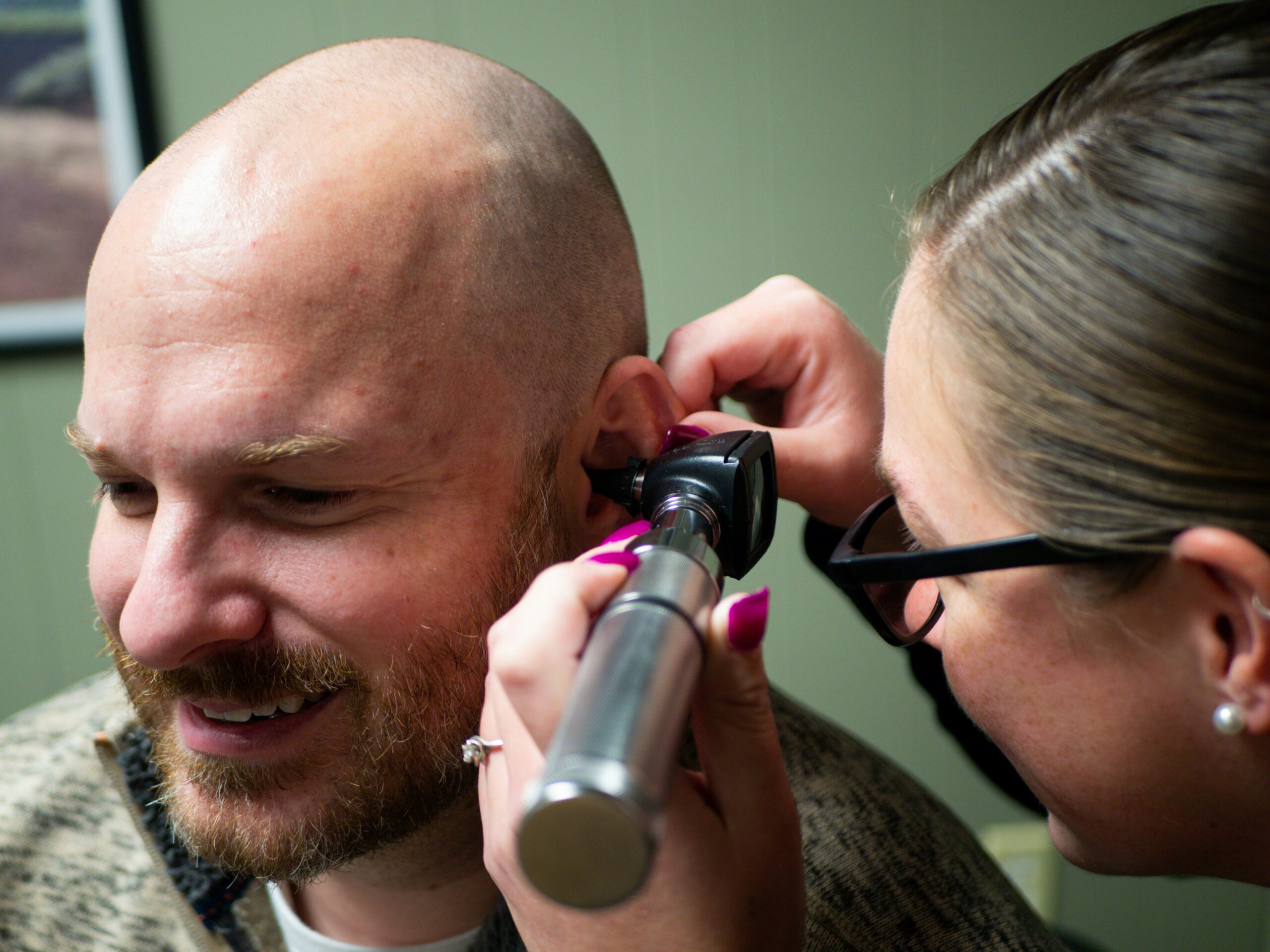
- Otoscope exam to confirm it’s swimmer’s ear (and not a middle ear infection, which needs a completely different treatment). Telehealth visits and retail clinics generally can’t reliably do this part — looking into the canal with the right equipment is how an accurate diagnosis happens.
- Prescription antibiotic ear drops — typically a combination of an antibiotic and a steroid to fight the infection and reduce inflammation are written and sent to your pharmacy the same day.
- Ear wick placement if the canal is too swollen for drops to reach the infection on their own.
- Clear at-home instructions on how to administer the drops correctly, how to keep the ear dry during recovery, and what to watch for as you heal.
Why CityDoc instead of waiting for your primary care doctor: PCP appointment availability in DFW often runs 3–5 days out during summer, longer if you don’t already have an established relationship with a pediatrician or family doctor. Swimmer’s ear gets worse every day it isn’t treated. Same-day care at CityDoc starts the antibiotic drops while the infection is still mild, so you (or your kid) can get back to summer sooner.
Our four DFW locations:
How CityDoc Treats Swimmer’s Ear
If you or your kids are in DFW water all summer, a few habits make a real difference:
- Dry your ears thoroughly after every swim. Tilt your head to each side, gently tug the lobe to release trapped water, and use a low-heat hair dryer from a safe distance if needed.
- Use OTC drying drops after lake or pool swims — especially after Lake Grapevine, Lake Ray Hubbard, or White Rock Lake, where bacterial load is higher than in chlorinated pools.
- Don’t insert anything into the ear canal. No cotton swabs, no fingers, no hairpins. The waxy lining is your protection — stripping it away is what creates the conditions for infection.
- Custom swim earplugs are worth considering for swim team kids, lifeguards, and anyone who gets recurring swimmer’s ear. Ask your provider about an audiologist referral for properly fitted plugs.
- Don’t ignore the itch. Early treatment is dramatically easier than treating a developed infection. The day-one itch is your warning shot — treat it before the pain shows up.
Frequently Asked Questions
Can swimmer’s ear go away on its own?
Sometimes very mild, very early cases resolve with aggressive home drying and OTC drying drops — but established infections typically don’t clear without prescription antibiotic ear drops. Without treatment, swimmer’s ear usually gets worse, not better, and can lead to spreading infection or chronic cases. If you’ve had symptoms for more than 24–48 hours without improvement, see a provider.
What’s the fastest way to treat swimmer’s ear?
Prescription antibiotic ear drops are the fastest and most effective treatment. Most people feel significantly better within 24–48 hours of starting drops, with full resolution in 7–10 days. Same-day walk-in urgent care — like CityDoc — can get you evaluated and the prescription sent to your pharmacy within a single visit, which is the fastest path from symptoms to relief.
Is swimmer’s ear contagious?
No. Swimmer’s ear is caused by bacteria growing in your own ear canal after water gets trapped — it isn’t passed from person to person. Sharing earbuds, towels, or earplugs with someone who has swimmer’s ear won’t transmit the infection. That said, if multiple family members are swimming in the same body of water and getting ear infections, it’s worth being more aggressive about drying ears after every swim.
Can urgent care prescribe ear drops for swimmer’s ear?
Yes. CityDoc Urgent Care providers can examine your ear, confirm the diagnosis, and prescribe antibiotic ear drops the same day at any of our four DFW locations. No appointment, no referral, no waiting days for a primary care opening. This is one of the most common conditions urgent care treats during summer.
How is swimmer’s ear different from a regular ear infection?
Swimmer’s ear (otitis externa) is an infection of the outer ear canal — the tube leading to your eardrum. A “regular” ear infection (otitis media) is an infection behind the eardrum, common in young kids and usually caused by a cold or congestion rather than swimming. The simplest way to tell them apart: with swimmer’s ear, tugging on the earlobe or pressing on the tragus makes the pain worse. With a middle ear infection, touching the outside of the ear doesn’t change the pain.